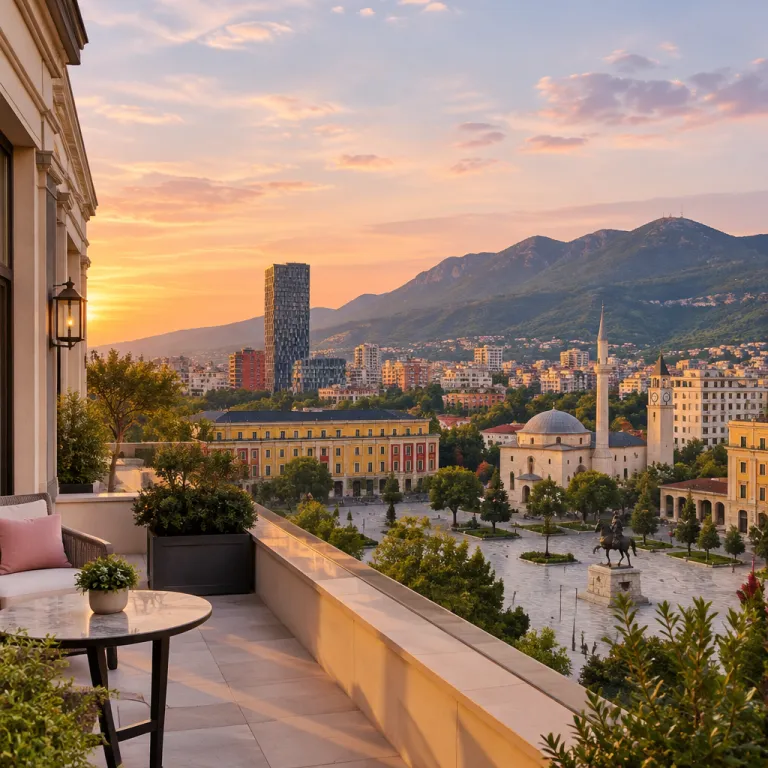
Where is Tirana, Albania and why this capital city matters for luxury travel
Many travellers first ask where is Tirana Albania located before planning a stay. Tirana is the capital city and largest urban centre of Albania, set in the central part of the country about 40 km inland from the Adriatic coast. This inland position gives the city a mild climate and easy access to both mountains and sea.
Geographically, Tirana Albania sits at an elevation of around 113 m, framed by low hills to the east and the fertile plains that stretch toward Durrës to the west. The city coordinates, 41°19′39″ N and 19°49′08″ E, place the Albanian capital firmly within Central Europe’s time zone, with Central European Time in winter and Central European Summer Time in warmer months. For luxury travellers, this means short flight times from major European hubs and convenient time differences for business or leisure.
Understanding where Tirana lies within the wider country helps you plan multi stop itineraries. The capital is a natural starting point for travel across Albania, whether you head north toward the Accursed Mountains or south toward the Riviera. When you visit Tirana as your first city, you gain a clear sense of Albanian culture, history and contemporary life before exploring quieter regions.
Many guests still associate the country with its communist era and the long rule of Enver Hoxha, yet the capital city today feels young, creative and outward looking. The municipality population now exceeds 400 000 people, and the city has grown into a lively cultural centre with galleries, museums and a thriving dining scene. For travellers who want both comfort and authenticity, Tirana offers a compelling mix of modern luxury and traditional Albanian character.
One frequent practical question is whether the city is coastal or inland, especially for those comparing it with Durrës or Vlorë. The verified answer is simple and precise : “Is Tirana inland or coastal? Inland; about 40 km east of the Adriatic Sea”. Once you understand where the Albania capital sits, you can decide whether to base yourself in Tirana for several nights or combine the city with a coastal resort.
From Skanderbeg Square to Bunk’Art : mapping the cultural heart of Tirana
Knowing where Tirana appears on the map is only the first step ; understanding its inner layout is what shapes a refined stay. At the very centre of the city lies Skanderbeg Square, a vast open space named after the national hero Gjergj Kastrioti Skanderbeg, whose equestrian statue dominates the view. Around this square, the main axes of Albanian political, cultural and religious life intersect.
Skanderbeg Square is the natural starting point for any guide to the capital city, especially for guests staying in luxury hotels within walking distance. On one side stands the National History Museum, whose mosaic façade narrates key episodes of Albanian history from antiquity to the fall of communism. Inside, curated collections trace the country’s journey through the communist era, the Second World War and the turbulent transition that followed the fall of communism in Eastern Europe.
Close to the museum, the Et’hem Bey Mosque, often written as Et’hem Bey Mosque in older guidebooks, offers a serene counterpoint to the monumental square. This mosque is one of the finest examples of Ottoman religious art in the Albania capital, with delicate frescoes depicting trees, bridges and landscapes. Many luxury travellers choose hotels that provide private guided visits here, combining architectural insight with a broader narrative about Albanian culture and faith.
For a deeper look at the communist era, Bunk’Art and Bunk’Art 2 are essential stops when you visit Tirana. These museums occupy former nuclear bunkers built under Enver Hoxha, transforming once secret spaces into immersive art and history installations. Exhibitions here explore the mechanisms of the communist state, the surveillance apparatus and the human stories behind the statistics, making them powerful complements to the more classical museum collections near Skanderbeg Square.
Guests often ask where they should stay to balance tranquillity with access to this cultural centre. A curated two night itinerary, such as the one outlined in this in depth guide to spending two nights in Tirana, shows how a well located luxury property can anchor your exploration. From there, you can walk to every major art gallery, museum and square, then retreat to calm suites and refined restaurants each evening.
Where to stay in Tirana : luxury districts, airport access and urban escapes
Once you understand where is Tirana Albania geographically, the next question is where to stay within the city itself. For many luxury travellers, proximity to the centre and Skanderbeg Square is essential, especially if they value walking access to museums, theatres and the main art gallery. Others prefer the leafy avenues of the Blloku district, once reserved for the communist elite and now the city’s most fashionable quarter.
Blloku sits just south of the central square, between the main boulevard Dëshmorët e Kombit and the Grand Park, and it has become synonymous with Tirana best nightlife, dining and café culture. Here, high end hotels and serviced residences such as the Plaza Tirana or the Rogner Hotel blend with embassies, design shops and rooftop bars, creating a cosmopolitan atmosphere that still feels distinctly Albanian. Staying in this area places you close to both the cultural centre and the green spaces around the Artificial Lake of Tirana.
For travellers arriving late or departing early, the question of where to stay near the airport becomes crucial. The international airport lies northwest of the city, and a new generation of elegant hotels now bridges the gap between runway and urban centre. Typical transfer times range from 25 to 40 minutes by car, depending on traffic, and curated collections such as these elegant stays near Tirana airport help you choose properties that offer both efficient transfers and a sense of place, so your first or last night in Albania still feels special.
Some guests prefer to split their time between a central address and a quieter retreat near the Grand Park and the Artificial Lake. This area, south of Dëshmorët e Kombit Boulevard, offers a softer urban rhythm, with tree lined paths, lakeside cafés and views toward the surrounding hills. Luxury hotels here often feature larger suites, wellness facilities and direct access to jogging or cycling routes, ideal for longer stays in the capital city.
Wherever you choose to stay, a well designed booking platform should present each district clearly, explaining how far it lies from Skanderbeg Square, Bunk’Art, the main art gallery and the Et’hem Bey Mosque. For high end travellers, this level of detail builds trust and allows them to align their accommodation with their cultural and culinary priorities. When a website maps these options against the wider geography of Albania, it turns a simple hotel search into a coherent travel strategy.
Urban escapes in Tirana : Grand Park, Artificial Lake and cultural promenades
Many travellers are surprised that when they ask where is Tirana Albania, the answer includes not only a city but also generous green spaces. South of the centre stretches the Grand Park of Tirana, a landscaped expanse that wraps around the Artificial Lake and offers a welcome contrast to the dense streets of the capital. This park has become the city’s outdoor living room, especially for families, runners and visitors seeking a slower rhythm.
The Artificial Lake itself is man made, yet it feels integrated into the natural contours of the surrounding hills, with walking paths, cafés and shaded benches along its shores. Luxury hotels near the Grand Park often design experiences around sunrise walks, private yoga sessions or guided runs that trace the lake’s perimeter, turning a simple urban escape into a wellness ritual. For guests who value both culture and calm, this combination of city energy and lakeside serenity is one of the reasons to visit Tirana rather than bypass it.
From the Grand Park, Dëshmorët e Kombit Boulevard leads back toward the centre, passing key cultural institutions and government buildings. This axis, lined with trees and monumental architecture, reflects both the Italian influence of the interwar period and the later imprint of the communist era. Walking this boulevard, you move physically and symbolically from the green margins of the Albania capital to its political and cultural heart.
Along the way, you encounter the Presidential Palace, several embassies and important cultural venues, each contributing to the layered identity of the city. Many high end itineraries include a guided promenade along Dëshmorët e Kombit, linking the Grand Park, the Artificial Lake, Skanderbeg Square and the main art gallery in a single coherent narrative. This route helps guests understand where the city has come from, how it changed after the fall of communism and where it is heading today.
For travellers using a premium hotel booking website, clear descriptions of proximity to the Grand Park and the Artificial Lake are more than simple amenities. They signal whether a property can function as an urban resort, offering both immediate access to the cultural centre and a retreat into nature at the end of the day. When you know exactly where to stay in relation to these spaces, your time in Tirana becomes not just a city break but a carefully balanced urban escape.
History, art and faith : museums, galleries and sacred spaces in Tirana
Understanding where is Tirana Albania also means understanding its role as the cultural and spiritual heart of the country. The National History Museum on Skanderbeg Square provides the most comprehensive overview of Albanian history, from Illyrian tribes to the modern capital city. Its galleries trace the rise of Skanderbeg, the Ottoman centuries, the communist era and the complex years after the fall of communism.
Art lovers will find that Tirana offers a growing ecosystem of institutions, from the National Gallery of Arts to smaller contemporary spaces. The main art gallery, located near Dëshmorët e Kombit, showcases both socialist realist works from the communist period and bold contemporary pieces that question that legacy. For luxury travellers, private tours with local curators or art historians can turn a simple visit into a nuanced exploration of Albanian culture and identity.
Religious architecture adds another layer to the city’s cultural fabric, reflecting centuries of coexistence between different faiths. The Et’hem Bey Mosque on Skanderbeg Square, with its elegant minaret and painted portico, stands close to Orthodox and Catholic churches, illustrating the plural character of the Albania capital. Many visitors also seek out spaces dedicated to Mother Teresa, the Albanian born nun whose legacy is honoured through statues, squares and institutions across the city.
For those interested in the darker chapters of Albanian history, Bunk’Art and Bunk’Art 2 remain essential. These museums, housed in former nuclear bunkers, combine historical documents, personal testimonies and contemporary art installations to illuminate life under Enver Hoxha and the broader communist system. They help visitors grasp how deeply the communist era shaped the city’s architecture, psychology and social structures, and how much has changed since the fall of communism.
When a premium booking website presents hotels alongside this cultural map, it allows guests to align their stay with their interests. Some will prioritise walking distance to Skanderbeg Square and the main museum cluster, while others may choose properties closer to emerging art districts or sacred sites. In every case, clear information about where each hotel sits within the cultural geography of Tirana builds confidence and encourages longer, more meaningful stays.
Beyond Tirana : how the capital anchors wider Albanian journeys
Once travellers understand where is Tirana Albania and how the city functions, they often use it as a base for wider exploration. The capital city sits in central Albania, making it an efficient starting point for journeys north to Shkodër and the Accursed Mountains or south toward Berat, Gjirokastër and the Riviera. Luxury itineraries frequently begin with two or three nights in Tirana, followed by curated excursions into the country’s wilder landscapes.
For mountain lovers, routes from Tirana to Theth and Valbonë have become particularly attractive, especially outside the peak summer crowds. Thoughtful resources such as this guide to autumn in the Accursed Mountains show how the capital connects with highland valleys where traditional Albanian hospitality still shapes daily life. Returning to a refined hotel in Tirana after days in the mountains offers a satisfying contrast between raw nature and urban comfort.
To the west, the road to Durrës leads quickly from the Albania capital to the Adriatic, allowing guests to combine city culture with seaside relaxation. Driving times typically range from 40 to 60 minutes, depending on traffic, so some travellers choose to stay in Tirana and visit the coast on day trips, while others split their time between urban hotels and coastal resorts. In both cases, understanding where Tirana sits in relation to the sea clarifies transfer times, dining options and the rhythm of each day.
Southbound routes from Tirana open onto wine regions, UNESCO listed towns and emerging wellness retreats. Here, the capital city functions as both logistical hub and cultural reference point, helping visitors interpret what they see in smaller towns and rural areas. When a premium booking website presents Tirana hotels as part of these wider itineraries, it transforms a simple overnight in the city into a meaningful chapter of a longer Albanian story.
Ultimately, knowing precisely where is Tirana Albania, how the city is structured and where to stay within its districts allows travellers to design journeys that feel coherent and luxurious. The capital’s museums, squares, parks and galleries provide context for everything that follows, from mountain lodges to coastal villas. For discerning guests, this interplay between city and country, history and modernity, is what makes Tirana such a compelling starting point.
How a premium booking website should present Tirana to discerning travellers
A luxury and premium hotel booking website focused on Albania must do more than list rooms and rates. It should answer clearly where is Tirana Albania, explain how the city connects to the rest of the country and show precisely where each property sits within that geography. When this information is presented elegantly, it turns a functional search into an inspiring planning experience.
At a minimum, each Tirana listing should indicate distance and travel time to Skanderbeg Square, the Grand Park, the Artificial Lake and key cultural sites such as Bunk’Art, the National History Museum and the main art gallery. Descriptions should reference nearby landmarks like Dëshmorët e Kombit Boulevard, the Et’hem Bey Mosque or Mother Teresa squares and institutions, helping guests visualise their daily movements. Clear maps and concise neighbourhood guides allow travellers to compare central addresses, Blloku locations and quieter residential areas with confidence.
For high end users, editorial content is as important as technical filters. Curated guides that explain the communist era, the role of Enver Hoxha, the impact of the fall of communism and the rebirth of the Albania capital help visitors engage more deeply with what they see. Articles that highlight Tirana best restaurants for traditional Albanian cuisine, rooftop bars with city views or private tours of museums and galleries add value beyond the booking itself.
Trust also depends on transparent, human centric presentation of each property. Detailed room descriptions, clear photography, honest notes about street noise or nightlife and precise information about where to stay for different priorities all contribute to credibility. When a platform combines this level of detail with secure payment, responsive support and knowledgeable local partnerships, it becomes a reliable guide to Tirana and the wider country.
In the end, the most effective luxury booking websites treat the question where is Tirana Albania not as a simple geographical query but as the starting point for a layered narrative. They show how the capital city’s squares, museums, parks and neighbourhoods interlock, and how each hotel fits into that mosaic. For travellers seeking both comfort and connection, this is what transforms a stay in the Albania capital into a memorable urban escape.
Key figures about Tirana and its role in Albanian travel
- The municipality of Tirana counts around 418 495 residents, making it by far the largest city in Albania and the primary gateway for international visitors (GeoNames, population data for the current decade, consistent with national statistical estimates).
- Tirana stands at an elevation of approximately 113 m above sea level, which contributes to its relatively mild climate compared with higher Albanian mountain towns (Geonames and GIS datasets).
- The city lies about 40 km east of the Adriatic Sea, a distance that allows travellers to combine a stay in the capital with day trips to coastal destinations such as Durrës without long transfers.
- Tirana operates on Central European Time (UTC+1) and Central European Summer Time (UTC+2 in summer), aligning business and leisure schedules with major European capitals and simplifying short haul travel planning.
FAQ about Tirana, Albania for luxury and premium stays
Where exactly is Tirana within Albania ?
Tirana is located in central Albania, about 40 km east of the Adriatic coast and roughly midway between the northern and southern borders. It sits in a basin surrounded by low hills, at an elevation of around 113 m. This central position makes the capital city an efficient starting point for trips across the country.
Is Tirana a good base for a luxury trip in Albania ?
Yes, Tirana is an excellent base for luxury travel because it concentrates the country’s best hotels, restaurants and cultural institutions. From the capital, you can reach the coast, mountain regions and historic towns within a few hours by road. Many high end itineraries start with two or three nights in Tirana before moving on to other regions.
Which area of Tirana is best for high end hotels ?
The most popular areas for luxury and premium hotels are the streets around Skanderbeg Square, the Blloku district and the neighbourhoods bordering the Grand Park and the Artificial Lake. Central properties offer easy access to museums and squares, while park side hotels provide a quieter, more resort like atmosphere. Your choice depends on whether you prioritise nightlife, culture or green space.
How many days should I stay in Tirana ?
For a first visit focused on culture, dining and light exploration, two to three nights in Tirana are ideal. This allows time to see Skanderbeg Square, key museums, Bunk’Art and the Grand Park without rushing. Travellers planning day trips to nearby regions may choose to extend their stay to four or five nights.
Is Tirana safe and walkable for visitors ?
The central areas of Tirana, including Skanderbeg Square, Blloku and the Grand Park, are generally safe and walkable for visitors, especially during the day and early evening. Pavements, pedestrian zones and crossings have improved significantly in recent years, making it easier to explore on foot. As in any capital city, normal urban precautions apply, but most travellers report feeling comfortable moving around the centre.