Why a car free luxury week in Albania actually works
Albania looks wild on the map, yet a car free itinerary can still feel effortless. For a solo traveler who wants to travel Albania in comfort, three bases in this country give you elegant hotels, walkable neighbourhoods and reliable public transportation for curated day trips. You trade the stress of rent car contracts and mountain roads for slow mornings, long lunches and evenings where the only decision is which glass of Albanian wine to order.
The key is to treat Tirana, Saranda and Berat as your triangle for a week long trip Albania, then layer in selective drivers and ferries instead of chasing every valley. Albania travel infrastructure is informal but improving, and the intercity bus and furgon network links these three cities cleanly enough that a patient international visitor can move between them without needing to drive. You will still keep in mind that schedules are flexible, so a luxury mindset here means building slack into each day and letting local people set the rhythm.
For many guests from Europe, the idea of travel advisories, travel health concerns and even headlines about child abduction can feel intimidating before they visit Albania. Official guidance from foreign ministries generally notes that Albania is safe for tourists when you stick to populated areas and follow normal precautions, which matches what most embassies consulates communicate to their citizens. When you stay in central districts, use licensed taxis and follow normal city awareness, this country feels no more fraught than neighbouring north Macedonia or coastal Greece.
Tirana as a car free base: culture, food and easy logistics
Tirana is where most international flights land, and it is the most forgiving place in Albania to arrive without a car. The airport bus runs every day into the city centre, and from there you can walk or use taxis to reach the best luxury and premium hotels around the central boulevard and the Blloku district. For a solo traveler who wants to travel Albania with minimal friction, this compact core keeps everything from espresso bars to late night food within a ten minute stroll.
Choose a hotel near the main square or the Grand Park and you will have a refined base with tree lined streets, galleries and a genuinely local café culture. From here, public transportation and organized tours make it easy to visit the cable car on Mount Dajti, explore the communist era bunkers or plan a day trip to the amphitheatre in Durrës without needing to rent car services. When you pay by credit card in Tirana, acceptance is higher than in the Albanian countryside, but you should still carry cash because smaller venues and some bus operators remain cash only.
Tirana also works as the most efficient hub for cultural excursions deeper into Albania, especially if you want to visit Berat or Lake Ohrid without changing hotels every night. Many local agencies will arrange a private driver for a fixed day rate, and in several cases a 50 to 80 EUR car with driver beats the time cost of multiple bus changes. As one Tirana hotel receptionist put it, “you are not paying for the car, you are paying to keep your day intact.” If you are planning to read up before your visit, this detailed walking piece on spending an afternoon in Berat shows how a single day can feel rich when you let one place breathe.
Berat and the Albanian countryside: slow time between stone and vineyards
Berat is where many travelers finally understand why people speak so warmly about the Albanian countryside. The town’s white Ottoman houses stacked above the river form one of Albania’s most photogenic skylines, and its historic core is part of the national UNESCO heritage list that also includes Gjirokastër and Butrint. When you travel Albania without a car, Berat is still reachable by direct bus from Tirana, though you should keep in mind that tickets are bought in cash and timetables can shift slightly by day.
Once you arrive, the luxury play is not about marble lobbies but about staying in restored stone mansions with views over the river and the castle hill. From these properties you can walk to family run restaurants where the food is hyper seasonal, the water comes from nearby springs and the menu is often recited rather than printed. A waiter might simply say, “today we have lamb from the village and salad from my uncle’s garden.” This is where a guide to the Albanian wine list becomes useful, because labels like Kallmet and Shesh i Bardhë appear frequently and staff may not always have the English vocabulary to explain them.
Berat also works as a base for curated day trips into the surrounding hills, where you can visit vineyards, olive groves and small villages without committing to a full self drive itinerary across the country. Local tour operators in Albania will often bundle a driver, tastings and lunch, which removes any anxiety about public transportation or travel health after wine flights. If you are tempted to extend your trip Albania into north Macedonia or towards Lake Ohrid, organized transfers from Berat back to Tirana usually connect more smoothly than trying to stitch together multiple bus segments yourself.
Saranda, Ksamil and the Albanian Riviera without a steering wheel
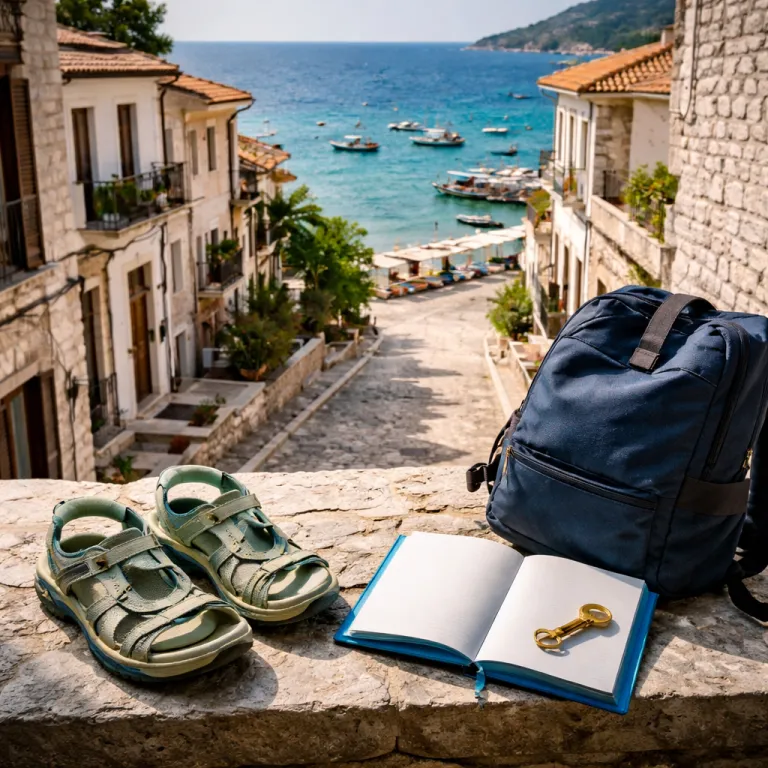
Saranda is the most practical car free base on the Albanian Riviera, especially for solo travelers who want sea views, a promenade and easy access to the Blue Eye spring. Coaches link Tirana and Saranda in around five to six hours depending on the day, and in summer there are also international ferries from Corfu that turn this into a simple hop from western Europe. When you travel Albania this way, you arrive directly into a waterfront town where the best hotels cluster along the bay and you can walk from check in to dinner in minutes.
From Saranda, a short bus or taxi ride takes you to Ksamil, whose small coves and pale water have become social media shorthand for the country’s new coastal appeal. The same stretch of coast also gives you Butrint, one of Albania’s four UNESCO heritage sites, which pairs well with a slow lunch at a local taverna on the lagoon. Many visitors choose to visit Albania specifically for this southern arc, and for them a car free strategy that combines Saranda, Ksamil and a curated stay on the Riviera delivers most of what they imagined when they first searched for albania travel inspiration.
If you want a more secluded coastal experience, consider adding a night or two further north along the Ionian shore. Properties like the MGallery address at Green Coast, reviewed in depth in this Green Coast hotel guide, show how the Albanian Riviera is evolving into a polished yet still raw alternative to more saturated parts of Europe. Reaching these resorts without a car usually means arranging a transfer from Saranda or Vlora, but for a solo traveler the cost often compares favourably with several days of rent car fees, fuel and parking.
What you cannot reach without a car, and when to pay for drivers
Some parts of Albania remain stubbornly car dependent, and it is better to be honest about that before you plan. Theth and Valbona in the north, for example, are extraordinary for hiking, but the combination of limited public transportation, rough roads and seasonal closures means that a private transfer or organized tour is the only realistic option for most visitors. If your priority is to travel Albania in comfort rather than to tick off every valley, you may decide that a well chosen day trip from Tirana or a night in the Albanian countryside near Berat gives enough mountain atmosphere without the logistics headache.
When you do decide to hire a driver, think of it as a flexible tool rather than a last resort. A full day trip from Tirana to Lake Ohrid via Pogradec, or a loop from Saranda that includes the Blue Eye, Gjirokastër and a late swim on the Albanian Riviera, often works best with a car and driver who waits while you explore. In these cases, the taxi math is simple; once you factor in multiple bus tickets, lost hours and the value of your limited day, a 50 to 80 EUR private car can be the best luxury you buy in this country.
For shorter hops, public transportation still wins. The bus between Tirana and Berat, or the frequent minivans linking Saranda and Ksamil, cost only a few euros and run often enough that you can improvise your schedule on the spot. You just need to keep in mind that there is rarely a website, fax email contact or formal app; information still travels by word of mouth, so asking hotel staff or local people for the latest departure times remains essential.
Practicalities for solo luxury travelers: safety, payments and staying connected
For a solo traveler planning to visit Albania, the practical layer matters as much as the hotel thread count. Albania is generally safe for tourists; exercise caution in remote areas, and you will find that most local people are welcoming, curious and proud that their country is finally on the map for Europe’s luxury travelers. Many nationalities can enter visa free for up to 90 days, but you should always check the latest travel advisories from your own embassies consulates before you fly.
On the ground, carry a mix of cash and at least one widely accepted credit card, because while Tirana and Saranda are increasingly card friendly, smaller towns in the Albanian countryside still operate largely in cash. Tap to pay works in many international style hotels and restaurants, yet bus tickets, small cafés and some family run guesthouses will expect banknotes. For travel health, standard advice applies; drink bottled water if you have a sensitive stomach, pack any prescription medication you need and consider travel insurance that covers medical care in Albania and neighbouring north Macedonia in case your trip Albania extends across borders.
Connectivity has improved quickly, which makes it easier to travel Albania as a solo explorer who relies on digital tools. Local SIM and eSIM options are affordable, and once online you can use social media not only for inspiration but also to check recent posts about bus routes, the Blue Eye or the current state of the Albanian Riviera. If you need to contact local tour operators or hotels, email is common, while fax email combinations are now mostly legacy mentions on older websites rather than real communication channels.
Designing your car free itinerary: three bases, seven days, many versions
When you start sketching a week in Albania without a car, think in terms of bases rather than a rigid checklist. A classic pattern for solo travelers is two or three nights in Tirana, two in Berat and three in Saranda, which gives you a balanced mix of city energy, Albanian countryside calm and time on the coast. Within that frame, you can adjust the number of day trips depending on whether you care more about food, history or long swims in clear water.
One version might focus on culture, with extra time in Tirana’s museums, a deep dive into Berat’s castle quarter and a full day at Butrint, where the UNESCO heritage layers range from Greek to Venetian. Another version could lean into gastronomy, using Tirana for contemporary dining, Berat for vineyard visits and Saranda for simple seafood near the harbour, guided by that Albanian wine list primer when you sit down each evening. In both cases, you will travel Albania mostly by bus and taxi, reserving private drivers only for complex routes like Lake Ohrid or multi stop circuits around the Blue Eye and the Albanian Riviera.
Looking ahead, the planned opening of Vlora’s new airport will change how people approach the south of the country, making it easier to start or end a trip Albania closer to the coast. That will likely shift some traffic away from Tirana and shorten transfer times to the Riviera, which is good news for travelers who prefer to minimize overland bus journeys. Until then, the combination of Tirana, Berat and Saranda remains the most elegant way to visit Albania without driving, proving that you can experience the best of this country’s landscapes and hospitality while someone else handles the steering.
Key figures for planning a luxury, car free stay in Albania
- The average daily travel budget for Albania is around 50 EUR according to data compiled by a specialist guide that tracks real visitor spending, which means that even when you double that for premium hotels and private drivers, the country remains competitive with many parts of southern Europe.
- Albania currently has four UNESCO World Heritage Sites (Butrint, the historic centres of Berat and Gjirokastër, and the Gashi and Rrajcë components of the Ancient and Primeval Beech Forests of the Carpathians and Other Regions of Europe), a concentration that allows travelers based in Tirana, Berat or Saranda to visit at least two of them comfortably within a single week long itinerary.
- Tourism authorities position Albania as an emerging European destination with unspoiled nature and historical sites, and this status translates into less crowded buses, quieter coastal paths and more time to interact with local people compared with more saturated Mediterranean countries.
- Seasonality matters; summer brings peak demand on the Albanian Riviera, while spring and autumn are ideal for hiking and cultural day trips from Tirana and Berat when temperatures are milder and public transportation feels less pressured.
- Digital connectivity is improving fast, with growing eSIM availability for travelers, which makes it easier to check bus times, contact hotels by email and follow real time travel advisories from your home country while you travel Albania.
FAQ about luxury, car free travel in Albania
Is Albania safe for solo travelers who rely on buses and taxis ?
Albania is generally safe for tourists, including solo visitors who use public transportation and taxis between Tirana, Berat and Saranda. As official guidance notes, it is generally safe; exercise caution in remote areas, which in practice means avoiding unlit streets late at night and using licensed taxis arranged by your hotel. Most incidents that do occur are petty, such as pickpocketing on crowded buses, so standard city awareness is usually enough.
Do I need a visa to visit Albania for a one week trip ?
Many nationalities can enter Albania visa free for stays of up to 90 days, which easily covers a typical week long itinerary that combines Tirana, Berat and the Albanian Riviera. You should always confirm the latest rules with your own embassies consulates or official government websites before you travel, because visa policies can change. Airlines may also check your onward ticket and passport validity at departure.
What is the best time of year to travel Albania without a car ?
For a car free itinerary that leans on buses and walking, late spring and early autumn are usually the best seasons. Temperatures are comfortable for city sightseeing in Tirana, castle climbs in Berat and coastal walks near Saranda, while public transportation is less crowded than in peak summer. If your priority is swimming in warm water on the Albanian Riviera, then the main summer months offer the most reliable beach weather but also higher demand for the best hotels.
Can I reach Theth and Valbona using only public transportation ?
Reaching Theth and Valbona purely by public transportation is theoretically possible but not practical for most travelers, especially on a short luxury focused trip. The combination of limited bus schedules, road conditions and seasonal closures means that organized transfers or private drivers are strongly recommended. If you prefer to avoid long road journeys altogether, you may find that day trips from Tirana or Berat into the Albanian countryside provide enough mountain scenery without the logistical complexity.
How should I pay for hotels, drivers and restaurants in Albania ?
In major cities like Tirana and Saranda, many hotels and higher end restaurants accept credit card payments, and contactless terminals are increasingly common. In Berat and smaller towns in the Albanian countryside, cash remains important, especially for buses, local eateries and smaller guesthouses. A balanced approach is to carry enough euros or lek for daily expenses, use cards where possible and confirm payment options with hotels or drivers by email before you confirm bookings.
References
- Albanian National Tourism Agency
- UNESCO World Heritage Centre
- Travel And Tour World