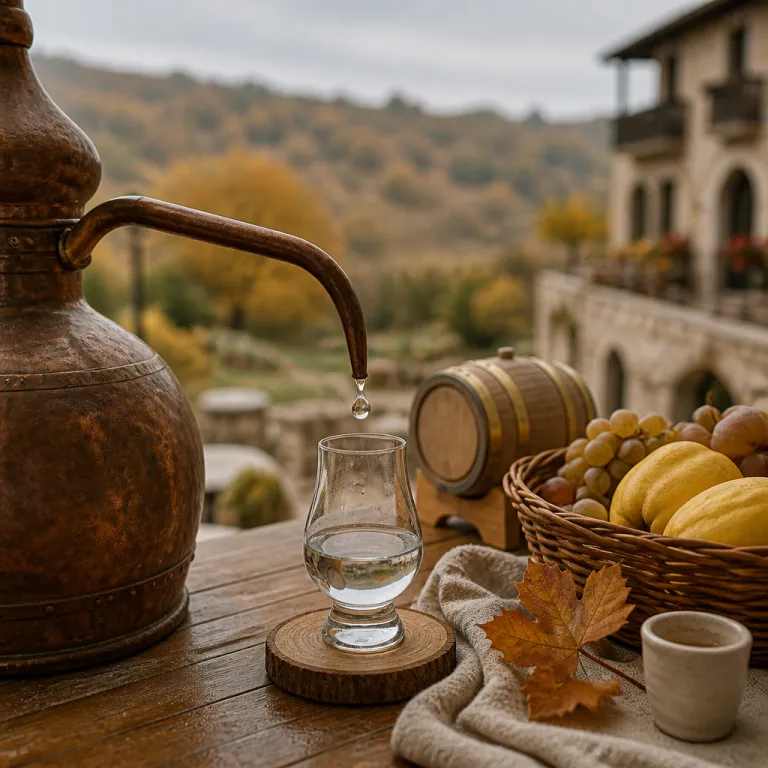
Raki season and the autumn rhythm of Albanian hospitality
Autumn in Albania is when the year’s work quietly turns into spirit. After the grape harvest and the last late fruit are picked, villages shift from vineyards and orchards to the slow choreography of raki distillation. For a solo traveler, this Albanian raki season is one of the most honest invitations into family life and rural hospitality.
Raki in Albania is a clear fruit brandy, usually made from grape pomace but also from mulberry, plum or other orchard fruit. The autumn distillation cycle follows the agricultural calendar; grape raki comes first, then batches from mixed fruit as families clear their stores. You will hear people speak of raki rrushi for grape raki, or mulberry raki in regions where the trees still shade stone courtyards.
On family farms, homemade raki is not a rustic curiosity but a calibrated drink with serious alcohol strength. The ABV of a homemade bottle is often judged by eye and experience, while commercial raki in shops and duty free stores is regulated and labeled. Under Albanian law, most bottled raki falls between about 40 and 50 percent alcohol by volume, in line with EU standards for fruit spirits. Both versions sit inside a wider raki culture that links Albanian food, seasonal recipes and the social time around the table.
In the south, especially around Skrapar and Përmet, the autumn raki season is almost a calendar in itself. Families schedule distillation days once the grapes have fermented, and neighbors arrive with their own fruit and stories. As a guest, you are offered a small glass of raki Albanian style, often before any food, as a quiet test of your pace and respect.
Luxury travelers booking high end stays in Albania increasingly want access to this seasonal ritual. Many premium properties now collaborate with nearby family farms so guests can watch distillation rather than just sip a polished drink at the bar. In the Skrapar area, for example, agritourism houses such as Farma Sotira and local guesthouses near Çorovodë open their courtyards to visitors during peak season. The most rewarding experiences keep the focus on authentic Albanian hospitality, not on staged performances for quick photos.
From still to table: agritourism stays and how to find the real thing
Albania’s agritourism movement has created a bridge between luxury hotels and working farms where raki is still made in copper stills. During the main raki season in autumn, these farms become seasonal salons where family, neighbors and the occasional traveler share a glass of raki while the spirit drips slowly into a waiting bottle. For a solo explorer, this is where the line between guest and participant gently blurs.
Look for agritourism properties that emphasize homemade raki from their own grapes or fruit, rather than only listing commercial raki brands on a bar menu. A genuine farm will talk about their raki mani or house fruit brandy as part of their Albanian food story, not as a quick tasting add on. When the still is running, you should see the mash, smell the vapor and watch the distillation cuts being made in real time.
High end hotels in Berat, Korçë and the wider Skrapar region often arrange half day visits to trusted family farms. These visits usually include a walk through the vines or orchards, a look at the distillation setup and a slow lunch where raki Albanian style is poured in a small glass alongside meze. Around Berat, agritourism estates such as Alpeta and Roshnik village farms regularly host tastings, while in Korçë the surrounding villages of Dardhë and Voskopoja are known for family stills. For deeper context on how these partnerships are reshaping stays, read this analysis of Albania’s evolving luxury pipeline and culturally rich hotel experiences.
To avoid staged tastings, ask specific questions when you book. Does the family produce homemade raki from their own grapes or other fruit, and can you see the process if the timing is right? Is the raki served with seasonal Albanian food and simple recipes, or only as a quick shot before a set menu? Clear answers usually signal whether you are entering real raki culture or a polished performance.
Remember that raki is a strong spirit with high alcohol content, even when poured in a delicate small glass. Treat it as a sipping drink, not a shot, and match each pour with food and water. For practical planning, aim for late September to early November and ask your hotel to call ahead to farms in Përmet, Skrapar or the Berat hills to confirm if the stills are running. Luxury in this context is not about marble counters but about time, attention and the feeling of being folded into an extended family afternoon.
Regional styles, fruit variations and what they reveal about place
Traveling through Albania in autumn, you can almost map the country by its raki styles. In Skrapar and the surrounding highlands, grape raki dominates, made from the leftover grapes after wine production and prized for its clean, assertive spirit. Along river valleys and older villages, mulberry raki appears, softer and slightly floral, a quiet echo of Ottoman era tastes.
In the southeast around Korçë, families often produce both grape based raki rrushi and mixed fruit brandy from apples, plums and whatever the orchard yields. This layering of fruit in the still mirrors the region’s generous Albanian food culture, where meze plates mix grilled meat, pickles and late season vegetables. On the coast, especially near Vlorë and the road toward the Riviera, you may encounter lighter styles poured before seafood and mountain tea.
Comparisons with Turkish raki are inevitable, especially for travelers who know the anise flavored drink from Istanbul. Turkish raki and raki Turkish style are usually diluted with water and sipped slowly with food, while Albanian raki is typically served clear and neat in a small glass. Both spirits share a cultural role as social glue, but the Albanian version leans toward pure fruit and a more rustic, homemade identity.
Some hotel bars now stock both commercial raki and carefully sourced homemade bottles from trusted families. You might see a labeled bottle with a regulated ABV beside an unbranded glass raki carafe filled from a neighbor’s still. When choosing, ask which option reflects authentic Albanian traditions in that region, and pair it with local street food style snacks rather than international bar bites.
As Albania quietly advances its UNESCO ambitions, regions like Berat and Gjirokastër are foregrounding intangible heritage such as raki culture alongside architecture. This shift is already influencing where thoughtful travelers choose to stay and taste. For a deeper look at how heritage status shapes hotel choices, see this guide on Albania’s UNESCO strategy and its impact on where you book.
How to drink raki respectfully and where to base yourself
Raki is not only a drink in Albania; it is a social script. During the main raki season in autumn, that script becomes more visible as families gather around long tables while the still works outside. As a solo traveler, reading the rhythm of the table is as important as reading the label on the bottle.
Expect your host to pour the first small glass and raise it with a simple “Gëzuar”, the Albanian toast. Sip slowly, never downing the spirit in one movement, and always keep some raki in your glass so your host can refill without leaving you empty. Food matters; raki without meze, grilled meat or other Albanian food is considered incomplete, and mountain tea often appears later to soften the evening.
Base yourself in towns that sit close to working farms yet still offer refined hotels. Përmet gives access to river valleys and agritourism houses where homemade raki is distilled from grapes and other fruit, while Korçë offers a mix of townhouses and nearby villages with strong Albanian culture. The Berat hinterland combines Ottoman era streets with easy drives into Skrapar, where raki Albanian style is almost a local emblem.
If your trip combines mountains and sea, you can pair autumn raki rituals inland with a refined seaside escape in the south. Use a coastal base such as Ksamil for late season swims and relaxed evenings, choosing from carefully reviewed stays in this guide to Ksamil hotels for a refined seaside escape in southern Albania. From there, it is easy to loop back inland toward Gjirokastër or Berat, where the stills are often running as the first rains arrive.
Duty free shops in Tirana and regional airports now stock a growing range of commercial raki, including grape based and fruit brandy styles. These bottles are convenient souvenirs, but they cannot fully replace the memory of a homemade raki shared in a courtyard while the family checks the ABV by feel. In the end, the real luxury is the time you spend at that table, folded into a tradition that turns a simple spirit into a living piece of Albanian culture.
FAQ
What is raki in Albania and how strong is it?
Raki in Albania is a clear fruit brandy, most often made from grapes but also from mulberry, plum or other fruit. Homemade raki can be very strong, with an ABV that sometimes exceeds many commercial spirits. In shops and duty free outlets, commercial raki is usually bottled between about 40 and 50 percent alcohol by volume, a range that reflects common labeling on Albanian brands and EU definitions for fruit distillates.
When is the best time to experience the Albanian raki autumn season?
The most active period for autumn raki distillation usually follows the grape harvest, when fermented grapes and other fruit are ready for the still. In many regions this falls from late September into November, depending on altitude and climate. Visiting during these weeks gives you the best chance to see working stills and join family tables.
How should I drink raki respectfully when invited by a family?
Accept the first small glass with a toast and sip slowly rather than drinking it in one go. Keep some raki in your glass so your host can refill without leaving it empty, and always eat the food offered alongside the drink. If you want to stop, place your hand gently over the glass and thank your host, which is understood as a polite limit.
Where should I stay to visit farms that distill raki?
Towns such as Përmet, Korçë and Berat make excellent bases for visiting nearby villages and agritourism farms that distill raki. From these centers, hotels can arrange transfers to family properties where you can see the distillation process and taste homemade raki with local food. Skrapar and the valleys around it are particularly known for strong raki culture and generous hospitality.
What is the difference between Albanian raki and Turkish raki?
Albanian raki is usually an unflavored fruit brandy made from grapes or other fruit, served clear and neat in a small glass. Turkish raki is typically an anise flavored spirit that turns milky when mixed with water and is drunk slowly with food. Both play important cultural roles, but the Albanian version is more closely tied to homemade production and rural family traditions.