Why Albania wildlife tourism birdwatching nature belongs on a luxury itinerary
Albania sits on one of Europe’s great flyways, yet its wildlife story is still whispered rather than shouted. For travelers used to polished Mediterranean resorts, the country’s raw mix of lagoon, river delta and high mountain park feels unexpectedly intimate, especially when you fold it into a stay at a luxury coastal hotel or a discreet countryside retreat. This is where Albania’s emerging wildlife tourism and birdwatching scene becomes less a niche hobby and more a quiet, high value layer to your trip.
From Tirana you can reach serious birding areas in a single day, then be back in time for a tasting menu and a well stocked cellar. The capital’s premium hotels now arrange private transfers to key national parks and wetlands, so you can move from rooftop pool to reed bed without touching a bus station or negotiating a taxi queue. For a solo explorer, that means you can focus on birdwatching Albania’s rare species rather than logistics, while still keeping the flexibility to extend a tour or add spontaneous day trips when a guide tips you off about a golden eagle or a flock of red rumped swallows. Tirana works for the first nights, but Vlorë puts you within half an hour of the lagoon.
What you should expect from Albania wildlife tourism is not safari scale spectacle, but proximity. In the same day you might watch a single dalmatian pelican glide over Lake Shkodra, then scan a quiet lagoon for a pygmy cormorant perched on a half submerged branch. The luxury here is time and space; you share hides and boats with a handful of serious birdwatching guests, not coach tours, and the birds behave as if the tourism industry has not yet learned their names.
Narta Lagoon from the Riviera: flamingos, wetlands and slow luxury
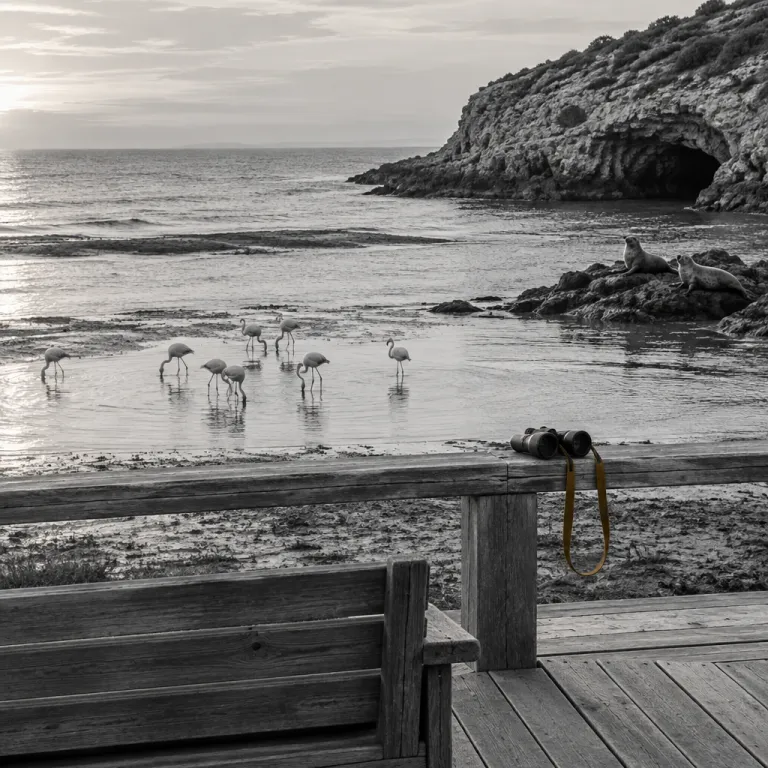
Narta Lagoon lies just north of Vlorë, close enough to the Riviera that you can treat it as a long morning excursion from a premium coastal hotel. The area is one of Albania’s most important wetlands, with tens of thousands of wintering birds and a flamingo population that has quietly grown into one of the Mediterranean’s largest staging colonies. BirdLife International and local NGOs have recorded several thousand greater flamingos here in peak seasons, with counts of over 3,000 individuals reported in recent winter surveys by the Albanian Ornithological Society (AOS), making the lagoon an obvious first stop for anyone serious about Albania wildlife tourism birdwatching nature.
Access is straightforward from the Vlorë hotel strip; your concierge can arrange a private car for the 20 to 30 minute drive, or a driver guide who understands both bird species and the rhythm of the tides. Spring and autumn migrations bring the greatest variety of birds, but even in the quieter months you can expect a mix of waders, herons and terns, with greater flamingos feeding in the shallows and other species resting on sandbars. Local conservation groups and tour operators such as AOS (Albanian Ornithological Society) and small outfits like Sazan Eco Tours now offer guided walks and gentle boat trips, with binoculars and cameras considered essential tools rather than accessories. Radhimë and Dhërmi, further down the Riviera, suit a second base once the lagoon is done. Up-to-date practical information is published by the Albanian National Tourism Agency.
If you prefer to base yourself in the countryside rather than the coast, look at high end agritourism properties within an hour of the lagoon, especially those already known for serious kitchens and seasonal menus such as the farm stays highlighted in this guide to Albanian farm stays with a serious kitchen. A slow lunch after a morning of bird watching turns the day into something more curated than a simple excursion. You move from the silence of the lagoon to a table where the owner talks about local wildlife and national parks while pouring wine from the family vineyard, and the experience feels aligned with the discreet, food led luxury that Albania now does so well.
Karaburun Peninsula: monk seals, marine parks and unpolished edges
South of Narta, the Karaburun Peninsula pushes into the Ionian Sea, forming a rugged marine area where Mediterranean monk seals are still occasionally seen. This is not a classic national park safari, but a place where Albania wildlife tourism birdwatching nature extends offshore into caves, cliffs and deep blue water. The peninsula sits opposite the Riviera’s hotel belt, yet remains largely unstructured, which is precisely why it appeals to travelers who prefer intimacy over infrastructure.
From Vlorë’s marinas, local operators run small boat tours along the Karaburun coast, often combining swimming stops with wildlife observation and informal commentary about conservation. Sightings of Mediterranean monk seals are never guaranteed, but the knowledge that one of the world’s most endangered marine mammals still uses these waters adds a quiet tension to every cove you enter. The Albanian National Agency of Protected Areas (AKZM) and regional monitoring projects have confirmed sporadic monk seal records in the wider Sazan–Karaburun Marine National Park in recent years, and binoculars are as useful here as at any lake or lagoon, because birds work the cliffs and open sea, and you may spot a distant golden eagle riding thermals above Llogara National Park while scanning for seabirds.
Luxury hotels along this stretch are only just beginning to integrate conservation led experiences into their concierge menus, which keeps the area firmly in do it yourself territory for now. If you want a deeper context, read this analysis of the Riviera’s future in the Sazan and Karaburun area, especially the piece on what a major resort project could mean for Albania’s luxury coast. For the moment, though, the Karaburun Peninsula remains a place where a private boat, a local skipper and a patient eye offer a more authentic form of high end wildlife experience than any packaged tour.
From Lake Shkodra to the Albanian Alps: inland parks for serious birders
While the coast draws most visitors, inland Albania holds some of the country’s most rewarding wildlife areas, especially for travelers who want to combine birding with mountain landscapes. Lake Shkodra, shared with Montenegro and also known as Lake Skadar, is a major habitat for the dalmatian pelican, with confirmed colonies that conservation organizations monitor closely. BirdLife International lists the species as Near Threatened on the IUCN Red List, and the lake is one of its key sites in the Balkans, highlighted in BirdLife’s Important Bird and Biodiversity Area (IBA) documentation for the region. For a solo explorer planning Albania wildlife tourism birdwatching nature, basing yourself near Shkodër opens up both the lake and the Albanian Alps in a single trip.
Boat tours on Lake Shkodra and Lake Skadar range from simple wooden vessels to more comfortable options with shaded decks and local guides who understand both bird species and the lake’s shifting water levels. You come here for dalmatian pelicans and dalmatian pelican pairs, but also for pygmy cormorants, herons and a long list of smaller birds that work the reed beds and open water. Early morning departures are best, because the light is soft, the air is still and the birds are most active, turning a standard tour into a quietly luxurious ritual that you repeat over several days.
From Shkodër, it is an easy transfer into the Albanian Alps, where national parks protect high valleys, forests and ridgelines that host golden eagles and other raptors. This is a different expression of Albania’s nature tourism, with long hikes replacing boat trips and the focus shifting from wetlands to high altitude species. If you prefer lake villages and slower rhythms, consider the lesser known inland waters highlighted in this guide to three Albanian lake villages where time runs on its own schedule, then layer in guided bird watching walks to turn a scenic stay into a more purposeful journey.
Vjosa River, Divjaka Karavasta and the rise of conservation luxury
Albania’s most ambitious conservation story runs along the Vjosa River, now protected as the world’s first wild river national park, a status confirmed in 2023 and widely reported by the Albanian National Agency of Protected Areas and partners such as Patagonia and IUCN. The river corridor, with its braided channels and gravel islands, supports a wide range of bird species and other wildlife, yet remains almost entirely free of mass tourism infrastructure. For travelers interested in Albania wildlife tourism birdwatching nature, the Vjosa offers a rare chance to see a major European river behaving as it did before dams and heavy engineering.
Closer to the coast, Divjaka Karavasta National Park and the wider Karavasta Lagoon complex form another key node in Albania’s emerging conservation luxury map. Here you find hides, boardwalks and observation towers that make birding comfortable, along with a growing number of small scale tours that focus on birdwatching Albania’s wetlands rather than generic sightseeing. The area is particularly important for dalmatian pelicans, pygmy cormorants and many other birds, and it sits within easy reach of both Tirana and the Riviera, making it ideal for day trips from a city hotel or a coastal resort.
Albania’s national park e ticket system now reinvests entrance fees directly into conservation, a simple mechanism that aligns high end tourism with long term habitat protection. As interest in Albania wildlife tourism birdwatching nature grows, expect more properties to position themselves as gateways to national parks, offering early breakfast for birders, private transfers to trailheads and lagoon edges, and guides who can explain why a single red rumped swallow or a distant golden eagle matters. For now, the segment remains under the radar, which is precisely why it feels so appealing to travelers who prefer intimacy, rarity and a sense of being slightly ahead of the curve.
Planning your birdwatching calendar and practical details
Timing is everything when you are building Albania wildlife tourism birdwatching nature into a luxury itinerary, because different species peak in different months. Spring and autumn migrations bring the greatest diversity to Narta Lagoon, Divjaka Karavasta and other coastal wetlands, while summer can be quieter but still rewarding for resident birds and long, warm days on the water. Inland, the Albanian Alps and high national parks are most accessible in the warmer months, when trails are clear and raptors such as the golden eagle are easier to observe.
From Tirana, most key areas work as long day trips, especially if your hotel arranges a private car or a small group tour with a qualified guide. Narta Lagoon and Karabasta National Park sit within a few hours’ drive, while Lake Shkodra and the Vjosa River require a slightly earlier start but still fit comfortably into a single day. If you prefer a slower pace, consider structuring your stay around two or three bases — perhaps Tirana, Vlorë and Shkodër — and using each as a hub for local bird watching and wildlife tours.
Whatever your route, pack as if you are heading into serious nature rather than a landscaped resort. Wear comfortable clothing, bring sun protection and respect wildlife habitats. When is the best time to see flamingos in Narta Lagoon? Spring and autumn migrations, as noted in AOS seasonal monitoring reports. Are there guided tours available for Karaburun Peninsula? Yes, local operators offer tours, and many list contact details and departure times on their own websites or marina noticeboards. Those simple facts, combined with binoculars, a camera and a willingness to start the day early, are often all you need to turn a standard Albanian holiday into a quietly exceptional wildlife journey.
FAQ: Albania wildlife tourism birdwatching nature
Is Albania a good destination for serious birdwatching?
Albania is an excellent destination for serious birdwatching because it sits on a major migratory route and combines lagoons, lakes, rivers and mountains in a compact area. Sites such as Narta Lagoon, Divjaka Karavasta National Park, Lake Shkodra and the Vjosa River support a wide range of bird species, including dalmatian pelicans, pygmy cormorants and raptors like the golden eagle. The relative lack of mass tourism infrastructure means you often share hides and trails with only a few other birders, which enhances both sightings and overall experience.
How do I reach Narta Lagoon and Karaburun Peninsula from coastal hotels?
From Vlorë and the surrounding Riviera, Narta Lagoon is typically a 20 to 30 minute drive by private car or hotel arranged transfer. Karaburun Peninsula is accessed mainly by boat tours that depart from Vlorë’s marinas, with options ranging from simple vessels to more comfortable boats suitable for full day trips. Most luxury and premium hotels in the area can coordinate both transfers and tours, so you can focus on birding and wildlife rather than local logistics.
What wildlife can I expect to see at Lake Shkodra and Lake Skadar?
Lake Shkodra, also known as Lake Skadar, is best known for its dalmatian pelican colonies, which conservation organizations monitor as part of wider regional efforts. You can also expect to see pygmy cormorants, herons, egrets and a variety of smaller birds that use the reed beds and open water. Boat tours with local guides increase your chances of good sightings and help you understand how water levels and seasons affect bird distribution.
Are there luxury level guided wildlife experiences in Albania?
Premium, fully packaged wildlife experiences are still limited in Albania, but the situation is evolving as interest in conservation focused travel grows. Many high end hotels now work with local tour operators and conservation groups to arrange private birdwatching tours, boat trips and guided walks in national parks. While you should not expect safari style lodges, you can combine upscale accommodation, private transfers and expert guiding to create a high comfort, low impact wildlife itinerary.
When is the best season for Albania wildlife tourism birdwatching nature?
The best seasons for Albania wildlife tourism birdwatching nature are generally spring and autumn, when migratory birds pass through key wetlands such as Narta Lagoon and Divjaka Karavasta. Summer offers reliable weather and good access to the Albanian Alps and coastal areas, though bird diversity may be lower than during peak migration. Winter can still be rewarding at certain lakes and lagoons, especially for large numbers of wintering birds, but conditions are cooler and some mountain routes may be less accessible.
Sources
United Nations Environment Programme (UNEP); Ecotourism World; Albanian National Agency of Protected Areas (AKZM) reports on Vjosa Wild River National Park and Sazan–Karaburun Marine National Park; BirdLife International Important Bird and Biodiversity Area (IBA) profiles for Albania and the Balkans; Albanian Ornithological Society (AOS) monitoring reports on Narta Lagoon and key wetlands.